My Genealogist helps you organize records, evaluate sources, resolve conflicts, and document your reasoning—while your existing genealogy application remains the home of the accepted family tree.
The research problem
Family-tree applications excel at storing accepted people, relationships, and events. They often leave you alone with messy archives, unclear evidence quality, conflicting records, and uncertainty about the next research step.
My Genealogist closes that gap as a research partner: it helps you assess what you already have, find what is missing, explain reasoning, and prepare reviewable conclusions.
Who it is for
Getting started
Help organize existing information and understand the next research step.
Experienced family historians
Assess, correlate, and document a large existing research collection.
Professional researchers
Support structured evidence review, research reporting, and transparent conclusions—with professional research discipline presented in a calm and understandable way.
Foundational principle
Research journey
A clear path from question to conclusion
Every stage keeps evidence visible and decisions with you. Guidance explains the next step;
it does not replace your judgment.
Know what supports each conclusion
Keep claims connected to records, citations, notes, and confidence.
Catch conflicts before they spread
Compare dates, places, names, and relationships before accepting a conclusion.
Bring order to years of collected material
Organize scans, transcripts, media, and research notes around the questions they help answer.
Know what to investigate next
Turn gaps and uncertainty into clear, prioritized research steps.
Preserve the reasoning
Maintain a reviewable record of evidence, alternatives, decisions, and conclusions.
Work alongside your tree
Interoperate with established genealogy interchange formats such as GEDCOM without forcing you to abandon the tools you already trust.
01Ask
02Gather
03Evaluate
04Conclude
Ask. Gather. Evaluate. Conclude.
Ask — Define a focused research question and constraints.
Gather — Collect documents, notes, and candidate sources in one place.
Evaluate — Compare evidence, surface conflicts, and weigh source strength.
Conclude — Record conclusions with a durable research trail you can revisit.
DADrovaris Advisor
Your Drovaris Advisor
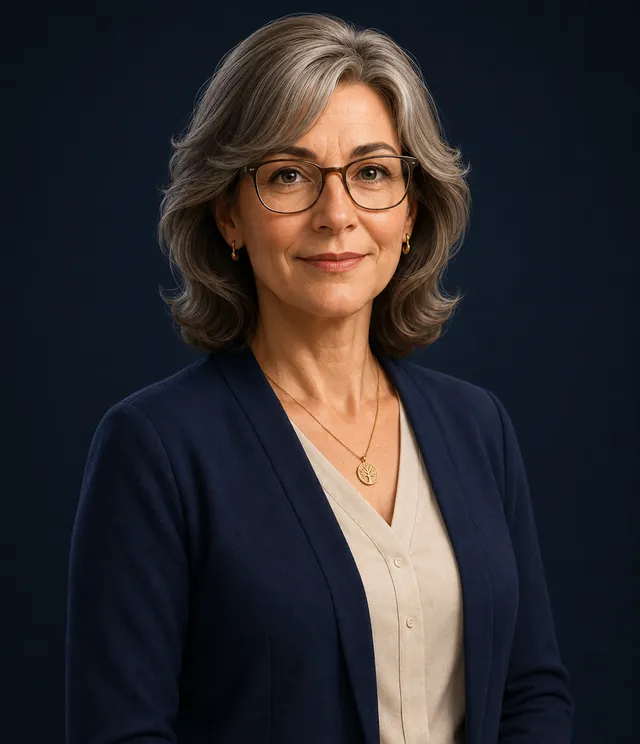
Meet Margaret
Genealogy Research Advisor
Margaret is the Drovaris Advisor for My Genealogist. She is an AI-powered digital advisor designed to help you organize evidence, compare records, identify conflicts, and understand the next step in your research.
Family history is built one piece of evidence at a time. I’ll help you organize records, compare what they say, and understand what deserves your confidence. You will always decide what belongs in your family history.
Margaret is an AI-powered digital advisor represented by an AI-generated character portrait. She is not a real person or a substitute for professional genealogical judgment.
Margaret can help organize, compare, explain, and draft. She does not silently change your family tree or turn uncertain information into fact.
How Margaret helps
Organize Evidence
Bring records, notes, citations, and open questions into a structured research process.
Compare Records
Identify where names, dates, places, relationships, or other details support or conflict with one another.
Explain Uncertainty
Make gaps, weak evidence, alternative interpretations, and unresolved questions easier to understand.
Suggest Next Steps
Turn uncertainty into focused and reviewable research actions.
Support Conclusions
Help draft research summaries while preserving the evidence and reasoning behind them.
You remain the researcher
Margaret provides guidance based on the records, evidence, and context available to My Genealogist. Her recommendations remain reviewable, uncertainty stays visible, and you approve every important conclusion.
See Margaret in ActionIllustrative examples
These examples illustrate the kind of guidance Margaret is being designed to provide. They are not live interactions or conclusions based on customer research.
Research recommendation
Scenario You have two records that may refer to the same person, but the birth years differ.
Before treating these records as the same person, I would compare the places, relatives, occupations, and original source details. The age difference may be explainable, but the current evidence is not yet strong enough to merge the identities.
Suggested next steps
Compare households and relatives
Review the original record images
Check whether the ages were reported consistently
Search for an independent record connecting both identities
Conflict explanation
Scenario A census record reports 1910 as the birth year, while a marriage record reports 1912.
The two records disagree, but they may not carry equal weight. The census age may have been estimated by another household member, while the marriage record may have been supplied closer to the event. I would keep both values visible until additional evidence helps explain the difference.
Evidence notes
1910 CensusConflicts
Marriage RecordSupports 1912
ConclusionUnresolved
Research summary
Scenario You reviewed several records connected to a possible parent-child relationship.
The available records consistently place Anna Morgan and Samuel Morgan in the same household between 1880 and 1900. Two records identify Samuel as her son, while one later record lists a different birthplace for Anna. The relationship is well supported, but Anna’s birthplace remains unresolved.
Summary structure
Supported conclusion
Anna Morgan and Samuel Morgan appear together in the same household across multiple records, with two sources identifying Samuel as her son.
Conflicting detail
One later record lists a different birthplace for Anna than earlier household evidence suggests.
Remaining question
Anna’s birthplace is not yet resolved with consistent supporting evidence.
Recommended follow-up
Seek an independent record that confirms Anna’s birthplace without discarding the well-supported parent-child relationship.
Evidence comparison
Scenario Three records provide different levels of support for the same claim.
The birth register provides the strongest support because it directly records the event and was created close to the time it occurred. The census helps corroborate the approximate year. The online tree may point toward useful research, but it should not be treated as evidence without supporting sources.
Example evidence
Original Birth Register
Directly records the birth event
Created close to the event
Strong support
Census Record
Reports an estimated age
Created years later
Supporting evidence
Online Family Tree
No visible source citation
Author unknown
Research clue only
Drovaris Advisors
What is a Drovaris Advisor?
Drovaris Advisors are AI-powered digital experts designed for specific products and domains. They combine product knowledge, structured guidance, and the context you choose to provide while leaving important decisions in your hands.
Keep the family tree you already trust
My Genealogist is designed to work alongside established genealogy applications and GEDCOM-based workflows. It strengthens the research around your tree rather than forcing you to replace it.
Assistance without surrendering judgment
AI can help organize, compare, explain, and draft. It does not silently change your family tree or turn uncertain information into fact. You review the evidence. You approve the conclusion.
Private preview expectations
My Genealogist is under active development. Participation may be limited, and not everyone who expresses interest is guaranteed access. Features may change during preview. Pricing and release dates are not invented here. Privacy and product terms will be provided before access where required.